Few riders in Grand Prix motorcycle racing history have achieved what Freddie Spencer managed in 1985 — and fewer still have made it look so natural.
Born Frederick Burdette Spencer, the Louisiana native earned his nickname “Fast Freddie” early, emerging from a racing family and becoming a multi-state champion across Texas, Oklahoma, Arkansas, Mississippi and Louisiana by the age of just 10. Turning professional at 16, Spencer already had a decade of racing experience behind him and was signed by Honda at just 18 years old.
Honda loyalty and early challenges
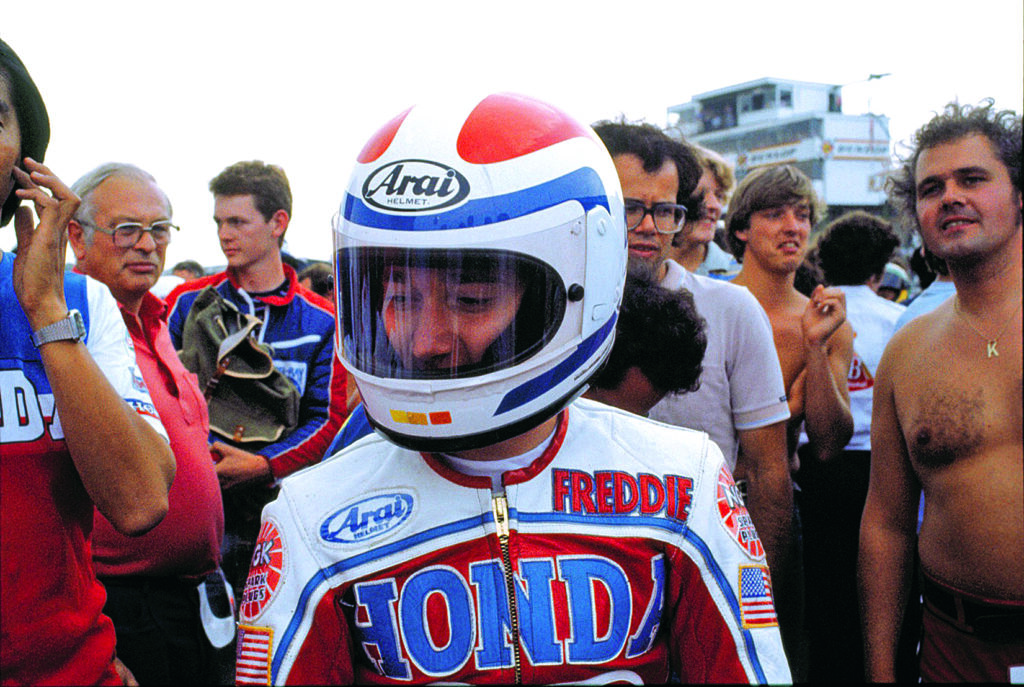
Spencer remained fiercely loyal to Honda throughout his early career, even during difficult periods that saw him campaign the unconventional NR500 with its oval pistons, as well as flat-tracking derivatives of the CX500. His breakthrough came aboard Honda’s NS500 triple, where he captured Honda’s first-ever 500cc World Championship in 1983, defeating a retiring Kenny Roberts in the process 006-007_CMM_JAN_26 ARCHIVE.
Enjoy more classic motorcycle reading, Click here to subscribe to one of our leading magazines.
The following season, injuries and early problems with Honda’s new V4 NSR500 curtailed his title defence — but the setback paved the way for one of the most ambitious championship bids ever attempted.
The audacious double attempt
Discussions began at Assen in 1984 between Spencer, Honda Racing Corporation engineer Youichi Oguma and legendary crew chief Erv Kanemoto about the possibility of contesting both the 250cc and 500cc World Championships in the same season.
The 250cc machine was developed by Satoru Horiike, effectively creating a bike that shared its DNA with the NSR500. Remarkably, the new 250 was designed and built in just three months.
A feat never repeated
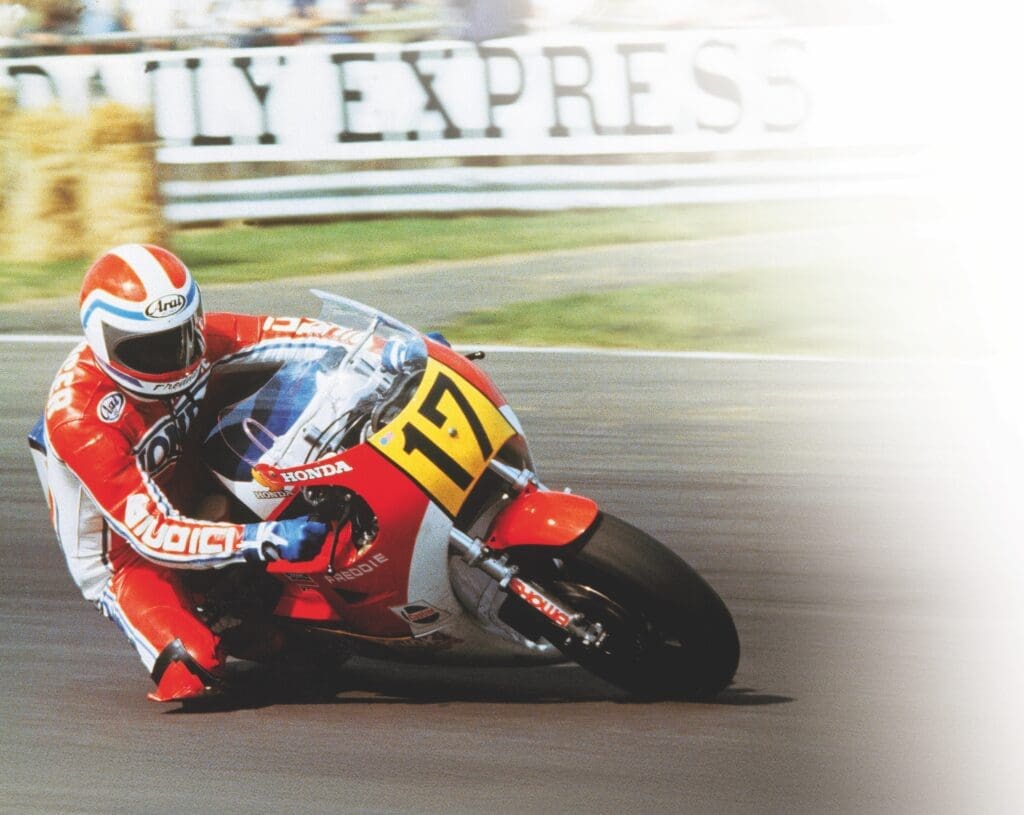
In 1985, Spencer delivered one of the greatest seasons in Grand Prix history, claiming both the 250cc and 500cc World Championships — a double that remains unmatched to this day.
While injuries, particularly to his wrists, would later limit his career, Spencer’s place among the sport’s elite was already secure. He retired from full-time Grand Prix racing in 1988, briefly returned in 1989 with Yamaha, and later raced Honda’s RC30 in the United States before a final, unsuccessful return to 500cc racing in 1993.
A legacy sealed in history
Whatever followed, Spencer’s achievements ensured his legacy. His 1985 championship double stands as one of the most extraordinary accomplishments in motorcycle racing — a testament to natural talent, engineering brilliance and sheer determination.
The original article by Bertie Simmonds appeared in Classic Motorcycle Mechaincs Magazine. To subscribe please visit here: https://www.classicmagazines.co.uk/classic-motorcycle-mechanics