We’re all familiar with Triumph Saints, Velocette ‘Noddy bikes’ and Interpol Commandos, but what about a big twin Matchless? This is probably the only survivor.
Words: IAN KERR Photographs: TERRY JOSLIN
One of my favourite motorcycle books of all time is ‘A Million Miles Ago,’ written by Neale Shilton, once the International Sales Manager for Triumph, before moving onto NVT and designing the Norton Interpol police machine. When the British makers were almost finished, Shilton ended his illustrious career at BMW, helping them get a foothold in the UK police motorcycle market.
Enjoy more classic motorcycle reading, Click here to subscribe to one of our leading magazines.
Although an autobiography, Shilton’s book is arguably the story of motorcycling as far as the British police forces are concerned, at least up to the point of his retirement in the 1970s. Employed by the various factories, Shilton ensured that at least as far as traffic patrol motorcycles were concerned, the bikes were 500cc and 650cc machines and when at Meriden, he is accredited with creating the famous acronym ‘Saint’ (Stops Anything In No Time) which would dominate the police motorcycle market for many years, both at home and abroad.
Of course, the police used smaller motorcycles for the local ‘bobbies’ too, which would later morph into and be replaced by the ‘Panda car.’ The most famous of these small police motorcycles was the LE Velocette, which again coined a nickname and became known as ‘Noddy bikes’ after the riders had to acknowledge senior officers without removing their hands off the handlebar, instead nodding their head as a mark of respect.
Depending on your point of view, these LEs – which at one time represented over 50% of their sales – either caused the demise of the Hall Green concern, or contributed to its longevity, at least for a short while until the police contracts died up.
As far as these two marques (Triumph and Velocette) are concerned, tracing their involvement with the police is quite easy and is well documented in many marque histories, but try tracing the sales and development of police models elsewhere, such as in this case Matchless, and it’s nigh on impossible. If you cross the Atlantic and look at Harley-Davidson and Indian, again their sales into the police markets are well documented.
Bizarrely, research of military motorcycles is reasonably easy, no doubt because of the vast numbers sold by the factories, and they tend to be slightly different in specification. Police motorcycle numbers, even when viewed in volume, are tiny in comparison and in virtually all cases, the police issue were nothing more than civilian machines with the odd blue light fitted, while in the 1950s and 60s they didn’t have any audible warning, other than the standard horn.
Again, try looking at the museums and historical sites for – in some cases dissolved – forces information and it quickly becomes apparent, details of motorcycle use is sketchy at best, non-existent at worst. What it does show though, is outside of the large forces such as London’s Metropolitan (‘Met’) police, motorcycles were in use, from all sorts of manufacturers, and put to all sorts of uses, for that matter, too.
However, those manufacturers probably did not enjoy the luxury of Triumph who had a full time manager servicing/marketing the police motorcycles, but no doubt a t other companies’ just a person who was available on an ad-hoc basis, dealing, one would assume, directly with police officers who themselves did not have a full-time fleet manager.
If you look globally, Berkeley Police Department in the USA is credited with the first ‘traffic’ department formed in 1911. Harley-Davidson, though, claims to have sold motorcycles to police in Detroit, Michigan in 1908 and there are other examples of machines in use, even earlier.
In the UK it is a similar story, with a photograph of a police officer in Nottingham, who was pictured on a Campion (a local brand) on a bike registered in 1903 on the internet, showing how early police took to the then-new form of motorised transport
Although it took a long time for London’s police to create its own museum with examples of ex-service vehicles, they do have quite an accessible list of all vehicles and the dates they came into service. The now famed Met Traffic Division came into being in 1921, but it was not until the start of the 1930s that they went over to two wheels in a big way – although other branches had been using them – with the purchase of 43 BSA solos and 23 BSA and Matchless sidecar combinations.
Both brands continued to get repeat orders in that decade along, with other makers like Brough Superior with Triumph first appearing in 1938, getting in on the act, too. Douglas, Panther, Norton and Rudge also appear on the list, but by the time the Second World War came and afterwards, there is no mention of Matchless (or AJS) ever again.
Now obviously the Met is/was the biggest purchaser of motorcycles, but out in the counties the much smaller forces – at one time over 50, before amalgamation – were also using machines, in some way or another. But it is doubtful until the Roadcraft publication came out in the 1950s, that the riders had any training like the Met, with the famed Hendon Driving School training riders/drivers from all over the world.
Just as an aside, the American training featured falling off at 30mph without being injured and using the bike as a ballistic shield, while in the UK they majored on riders staying on them, not falling off them! And omitted the getting shot at bit…
Back to the British police bike story; outside of Triumph, it is very difficult get any sort of timeline going about the bikes or the various uses of two wheels. For instance, on the web there is picture of a Women’s Motorcycle Squad outside the Cheltenham police HQ on a mixture of solos and sidecars in 1918. Sussex police has a solo Douglas just after the war and Bootle Borough Police were using an AJS combination in 1923.
In 1929, WPC Janet Gray and WPC Lodge were both pictured on AJS motorcycles by the local paper in Lydney, Gloucestershire, and there are numerous other similar images in existence. A 1933 550cc side-valve New Hudson used by Warrington police anyone?
While some of these might just be one-offs, it was the 1930s Road Traffic Acts and the introduction of the driving test that forced police forces to start enforcing regulations (including speeding, now there was a 30mph limit) along with the printing of the Highway Code shortly after, that resulted in the start of traffic departments to mirror that of the Met.
But, as I have alluded to, the budgets may have been small and local manufacturers would have been used for convenience, as they moved away from officers using their own machines, which at one time was quite common.
In Roy Bacon’s Restoration-series softback on the AMC post-war twins, there is picture of a line-up of Matchless G9 500cc models for the South African police, which all look standard in every respect. Then there is picture of a G12 heading to Canada; again, apart from high handlebars and the brake and gear levers being reversed, it looks standard, with no emergency service equipment or markings.
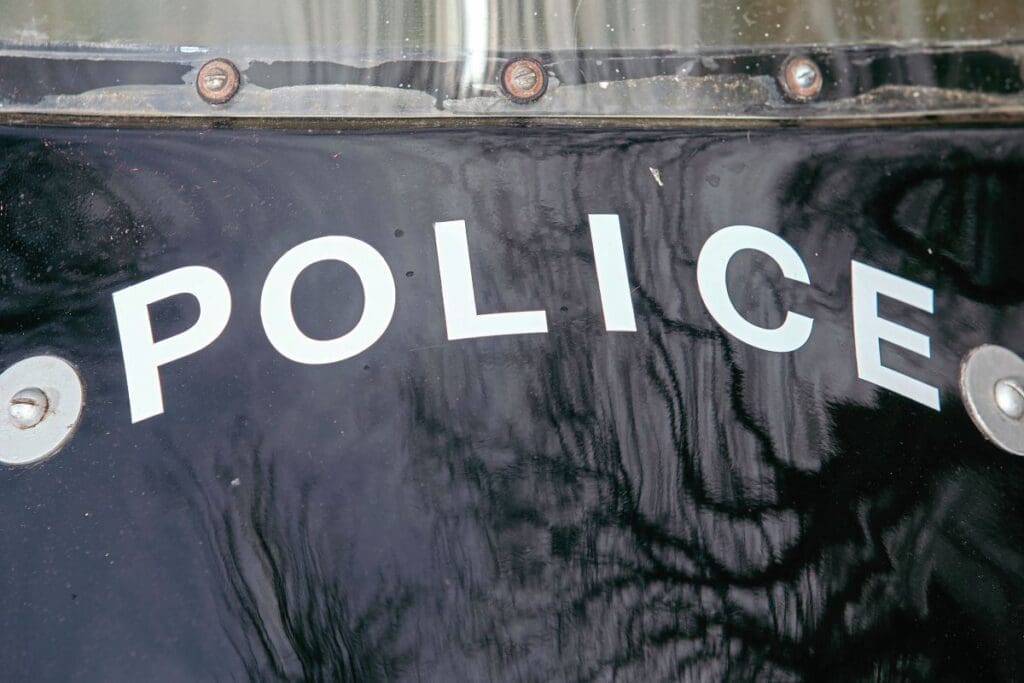
Another book has picture of a rider in his Corker helmet sitting astride a 1962 G12 in white with a loop crash bar at the front, on which is mounted a speaker for the radio facing the rider, with the main box mounted on a carrier behind the single seat. One assumes it was a tank-mounted control box with a handset. A top half fairing is cut around the single headlight, which has the word police following the curvature. Bar end mirrors poke out sideways, although a lot of the bike is out of shot, it being taken as a three quarter view.
Research has shown the aforementioned use of AMC machines is limited, with little documentation recording it, and the only other mention I can find, was when conducting the test of the City of London Greeves test we published last year in this magazine. Totally independent of the Met, the City of London police moved to Greeves to replace the lightweight Matchless G2s they had been using up to 1964, apparently unhappy with the AMC factory, which ironically was London-based in Woolwich, despite the widespread use of Velocettes by others.
None of these, or in fact any of the AMC machines mentioned here, appear on the two lists of Historic Police machines that are still in existence, many of these still wearing the appropriate signs, lights and radios they had when in service.
Obviously, many ex-police machines have been civilianised; in particular, many Triumph TR6Ps now look very different to the their original build, although still wearing the very distinctive registration marks, and maybe very few current owners are not in the least bit interested in their bike’s past, although it is interesting that there are five police Brought Superiors recorded.
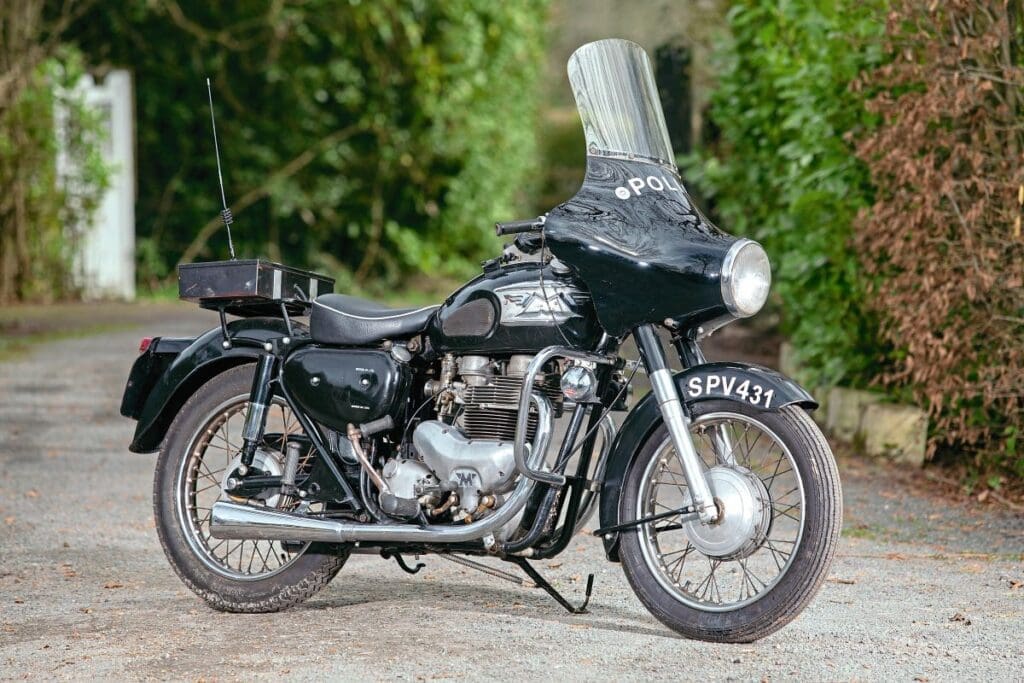
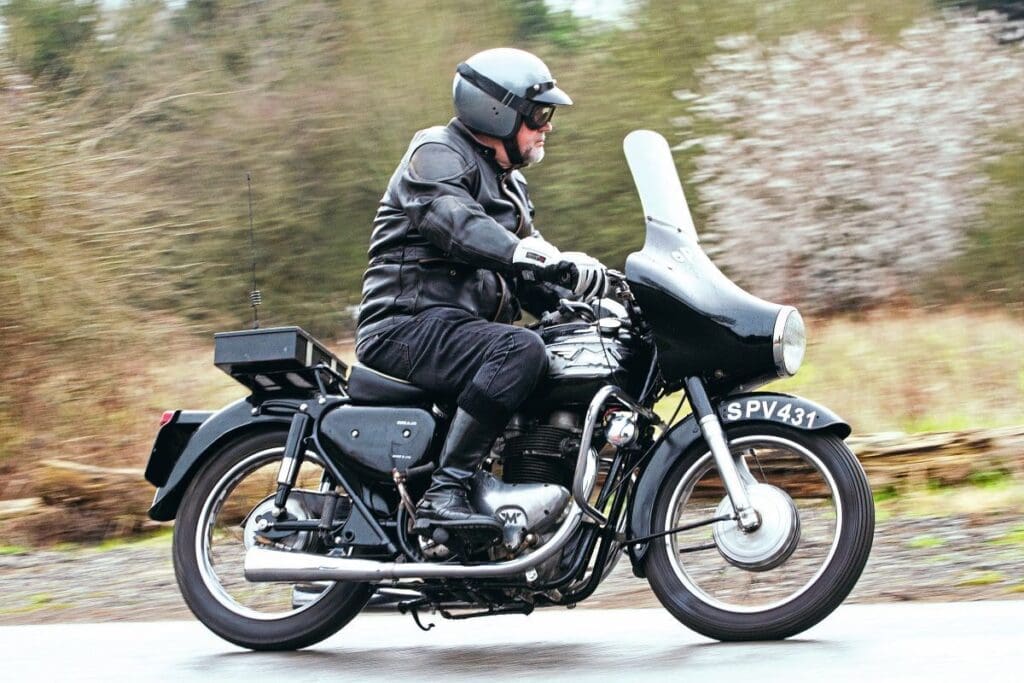
Bearing all that in mind, what that does is make this police Matchless G12 a seemingly unique survivor of a law enforcement past. Rescued by well-known AMC devotee Roy Bellett, it was offered to him in 2010 at Kempton Park autojumble. Realising – despite his extensive knowledge of the brand, not to mention extensive collection of machines – he had not come across one before, Roy added it to his stable as something unique. Over the years, it was brought it back to life.
The factory records held by the AJS and Matchless Owners Club show the bike originally being dispatched to dealer Boltons of Ipswich, Suffolk, on June 26, 1963. Two months later, the original buff logbook shows it being registered to Ipswich Borough Police, based at the Town Hall, Ipswich on August 23, 1963.
It was then registered to the Suffolk Police Authority at the County Hall on the March 30, 1967 – presumably just legal change as police forces amalgamated or got absorbed – because it then ended its service just a year later, when it passed into a private buyer in Southwold, Suffolk, in January 1968.
It then passed to Hawes garage in Bury St Edmunds, also Suffolk, shortly after, before having another three owners in the same locality, before the buff log book ended and nothing is further known as to how it ended up in a sorry, dilapidated state in Surrey, despite countless enquiries.
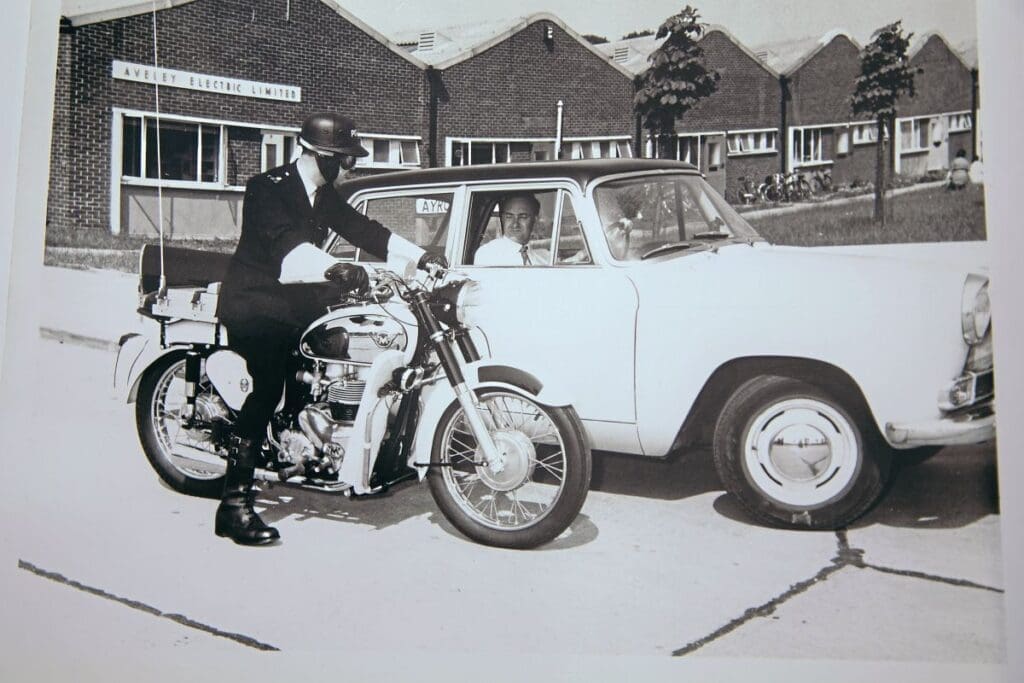
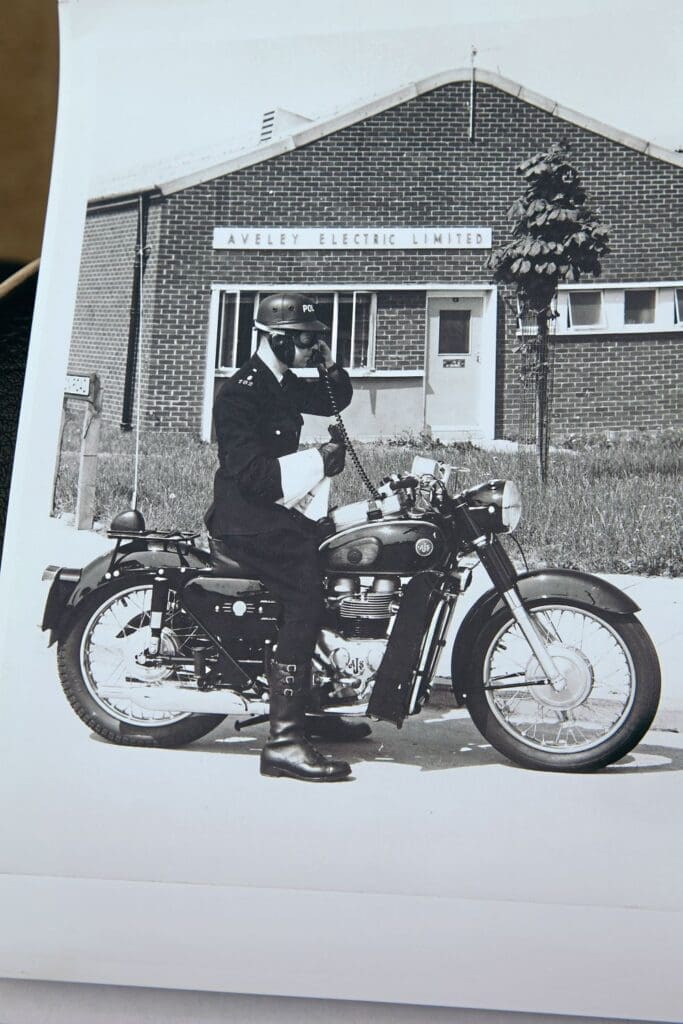
What has emerged are two pictures of two different G12s, one in black (as this bike) and one in white outside a firm called Aveley Electric Ltd, based in a town of the same name (Aveley) in Essex, which is now listed on an antique radio site. It fits in with a sheet of paper that came with the bike, that suggests the firm had been instructed to look at fitting a radio on the Matchless’s petrol tank and dealing with the vibration that was likely to cause problems.
Both these pictures show different radios; one a Corsair as fitted to Roy’s bike and the other, looks like the more common Pye unit. Although both seem to have the same aerial at the rear, the white bike is similar to that in the Redman book, while the black bike looks almost identical to the bike featured here, apart from the fact it has a blue light mounted on the crash bar.
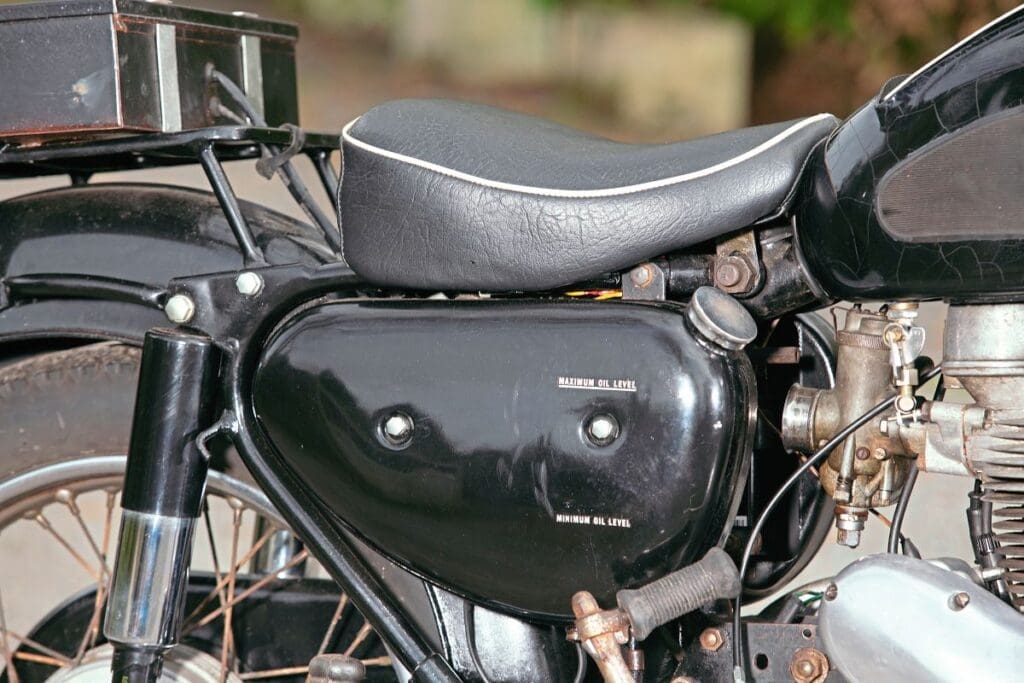
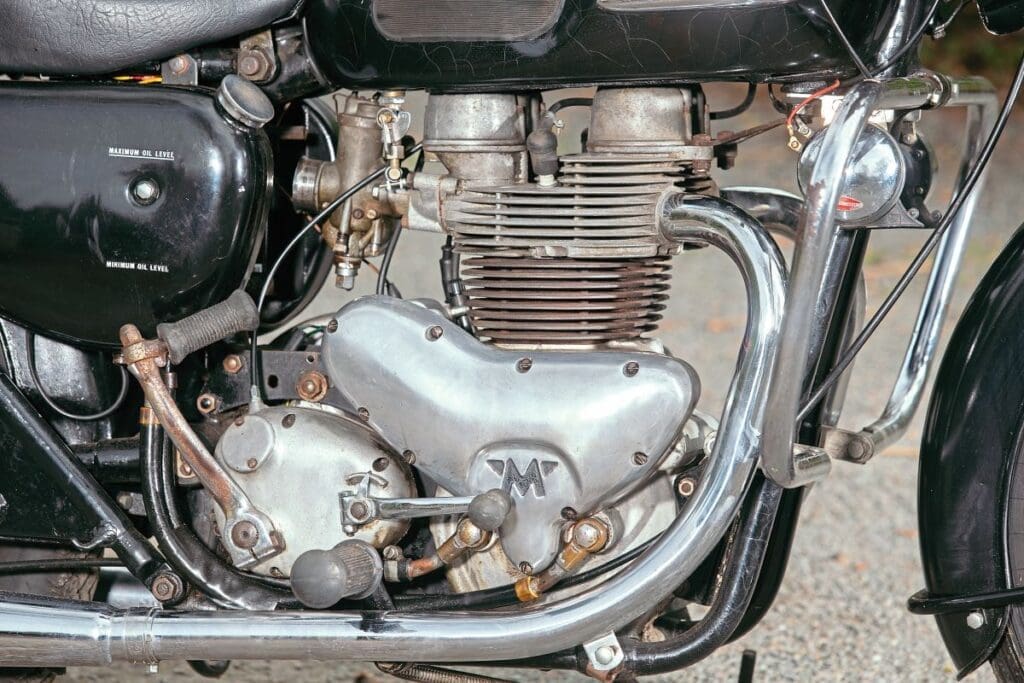
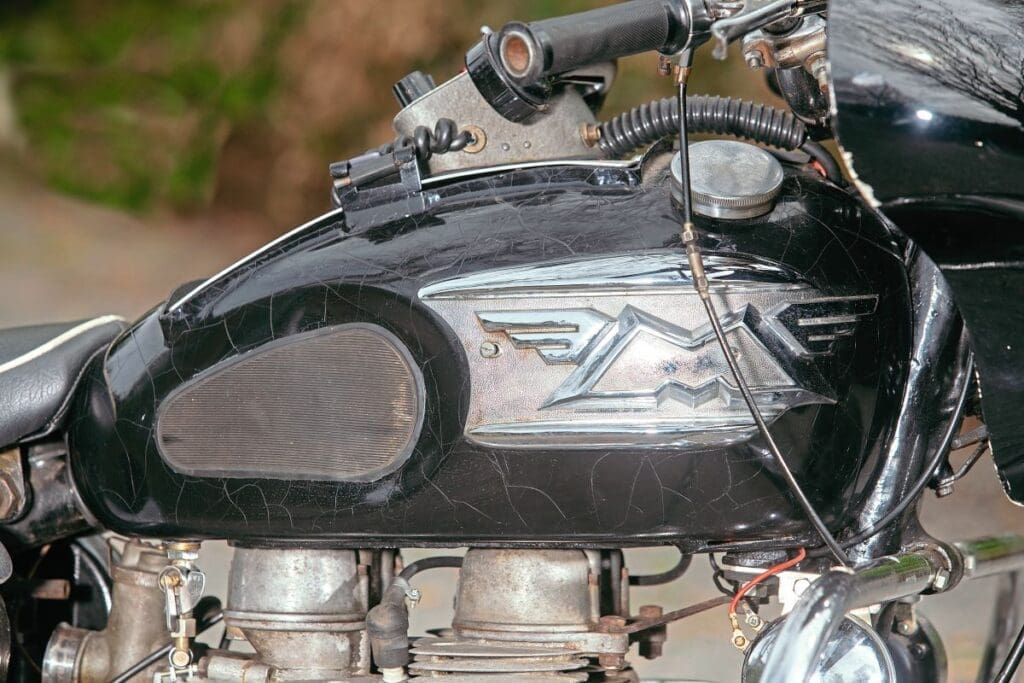
The tank of Roy’s bike is obviously factory, with a large cut-out in the top as used by other manufacturers at the time like Triumph and Norton, but Roy has had to make a plate to mount the Corsair radio on the top, as it was bare when he got it and had nothing to use as a template.
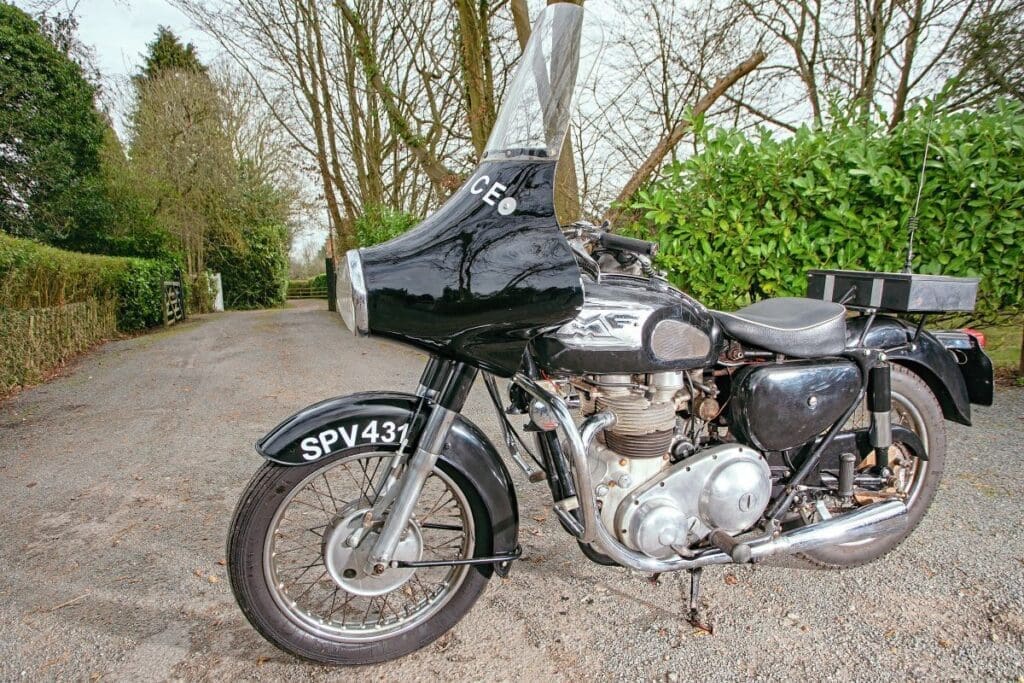
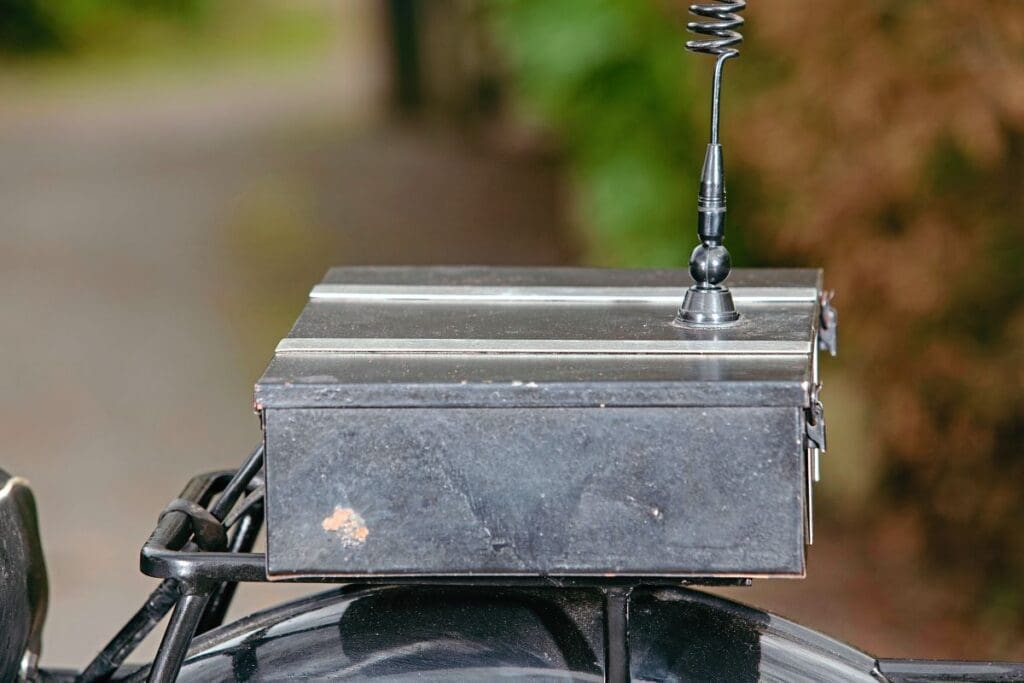
On the rear, a Black and Decker metal toolbox doubles as a radio box and houses a tape recorder, which plays genuine police radio calls through the speaker – a nice touch at shows and exhibitions. The fairing in this case is a full top half fairing, not cut around the headlight like the one in the photo.
In many ways, were it not for the original log book with its matching and engine numbers to the bike, anybody purchasing this over the years may well have just assumed it was standard G12, as even a dating letter would not have shown the police connection. Given all of this, the bike must, at least until something else surfaces, be seen as the only genuine, police model Matchless G12 in existence and so regarded as totally unique, as well as being an example of a bike that the factory may not have even known was headed for public service.
Here I must confess I own a G12 and it is my go-to motorcycle, which has served me well all over Europe and the UK, and is the last bike I would part with. At the risk of being pilloried, it is better than any Triumph of the same era, and I have a few of them too, to back up that comment.
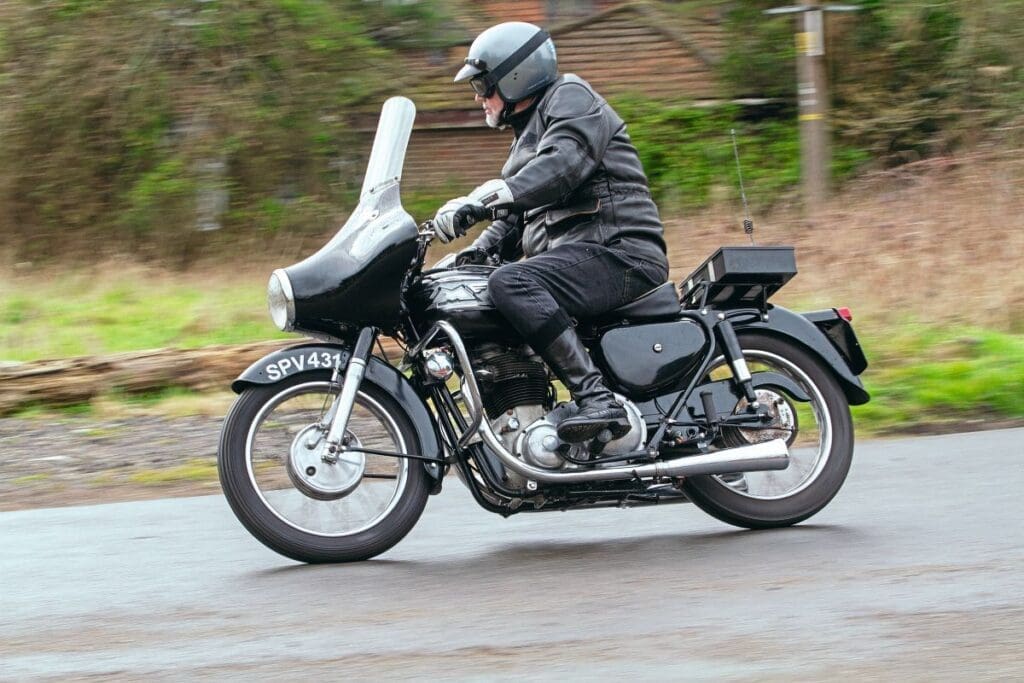
Consequently, the actual riding part of things was just like putting on old, comfortable shoes, although I was interested to see if there was any gearing changes. Roy had just replaced the magneto and the timing was a fraction out, but the G12 still exhibited the rare combination of docility, tractability and, when needed, a fair turn of speed. The first two being ideal when riding for photographer Joslin’s camera.
As usual for one of these models, the speed built up with a smooth, deceptively, rapid manner and it is only the vibration that comes in above 60, that really lets you know how quickly you are going. Road tests in the day quoted top speeds just above the ton (100mph) at a test track, but although I cannot comment in this case and the gearing seemed standard, one assumes it would be the same top speed as before.
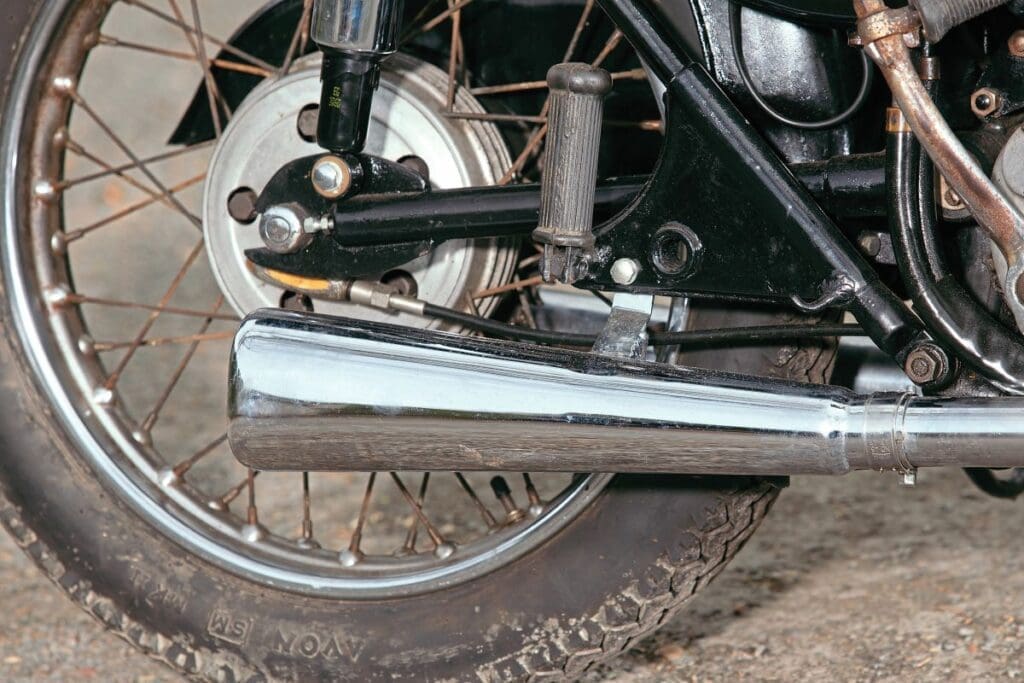
The Essex lanes being covered in wet debris limited the bend swinging, but it was certainly on a par with my own machine in terms of handling and you do not notice the hefty weight of close to 500lbs/227kg. The slightly larger front brake, new for 1963, was good and the back showed a need for adjustment, but the bike stopped quickly enough under control when asked to.
I admit to a bias, but I would have been happy riding this all day and the conservative styling would not have proved a problem and I know from experience, the model is totally reliable and virtually maintenance free, a good, solid workhorse, that would have been well suited to daily duty.
Despite its uniqueness, Roy decided to part with it as he continues to thin out his collection and it was offered via dealer Andy Tiernan – it didn’t hang around long at all, selling for a price premium too. Exclusivity never does come cheap.