Few individuals have shaped the look and function of modern motorcycles as profoundly as Hans Muth. A designer whose influence spans both classic and contemporary motorcycling, Muth helped redefine how bikes should perform, feel and — crucially — look.
Originally trained in car design, Muth worked for manufacturers including Ford before joining BMW in 1971 as an advanced exterior and pre-programme interior designer. At the time, BMW’s motorcycles were engineered first and styled second — a common approach across the industry, where engineers dictated form and aesthetics were an afterthought.
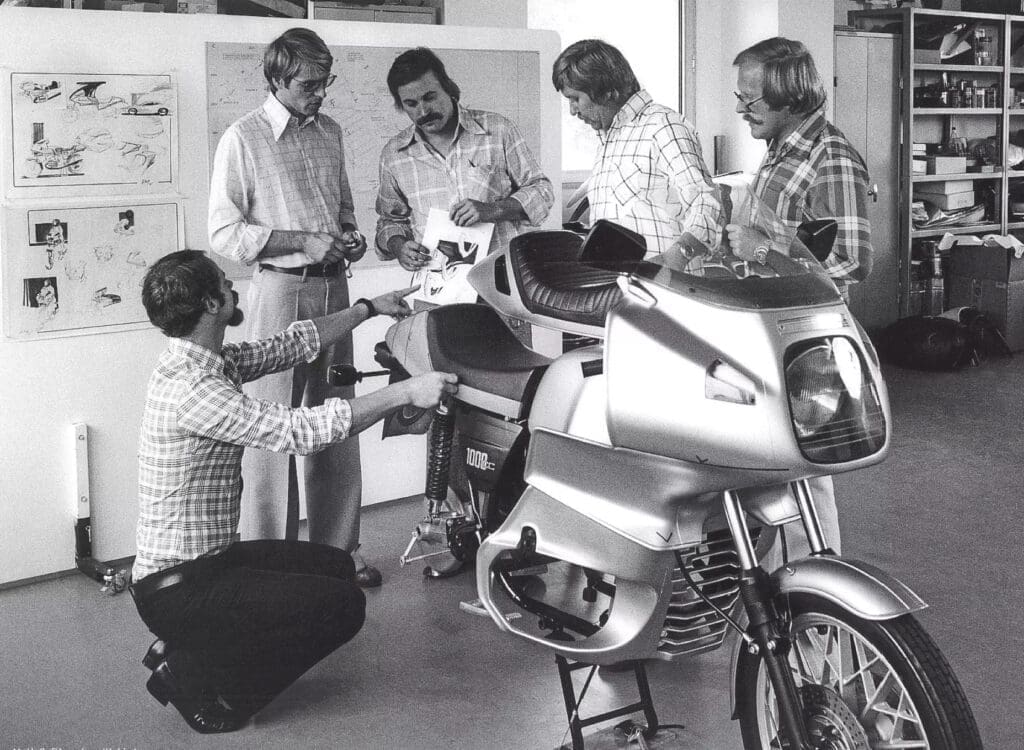
the ‘seat-and-a-half’ that improved the
aerodynamics of the R100RS
Muth’s arrival coincided with BMW’s growing awareness that its motorcycles had an image problem. Seen as worthy but dull, the brand needed something bold. Encouraged by BMW Motorrad development chief Hans-Gunter von der Marwitz — himself a committed motorcyclist — Muth began working unofficially alongside his car design role to reshape BMW’s motorcycle identity.
Enjoy more classic motorcycle reading, Click here to subscribe to one of our leading magazines.
At board level, recently appointed executive Bob Lutz pushed hard for a true BMW sports bike. The result was the BMW R90S, a machine that balanced practicality with genuine style. Muth shaped a comfortable yet sporty fuel tank inspired by his own MV Agusta, integrated a small handlebar fairing with clock and voltmeter, and created a seat unit that looked fast but worked for two-up riding.
His most iconic contribution, however, was visual. The hand-painted two-tone paint schemes — silver smoke and the famous orange-over-silver ‘Daytona’ finish — transformed BMW’s image overnight. Despite its premium price, the R90S sold out as soon as it was shown.
Muth’s philosophy was simple: form must follow function. When the R90S revealed high-speed stability issues caused by aerodynamic lift, he turned to wind-tunnel testing. For the /7 range, the BMW R100RS gained a full fairing developed at Pininfarina, complete with a chin spoiler to reduce lift. It was a breakthrough moment for motorcycle aerodynamics and touring comfort.
That success led to the RT touring fairing — featuring vents and an adjustable screen to manage airflow and negative pressure — a design that succeeded where others, including Ariel and Vincent, had failed. The RT remained in production until 1995.
Muth’s final BMW gamble became one of its greatest triumphs: the BMW R80 G/S. Inspired by the Range Rover concept, it combined road performance with off-road capability in a way never seen before. Many believe it helped secure BMW’s future, and its legacy lives on in today’s adventure bike market.
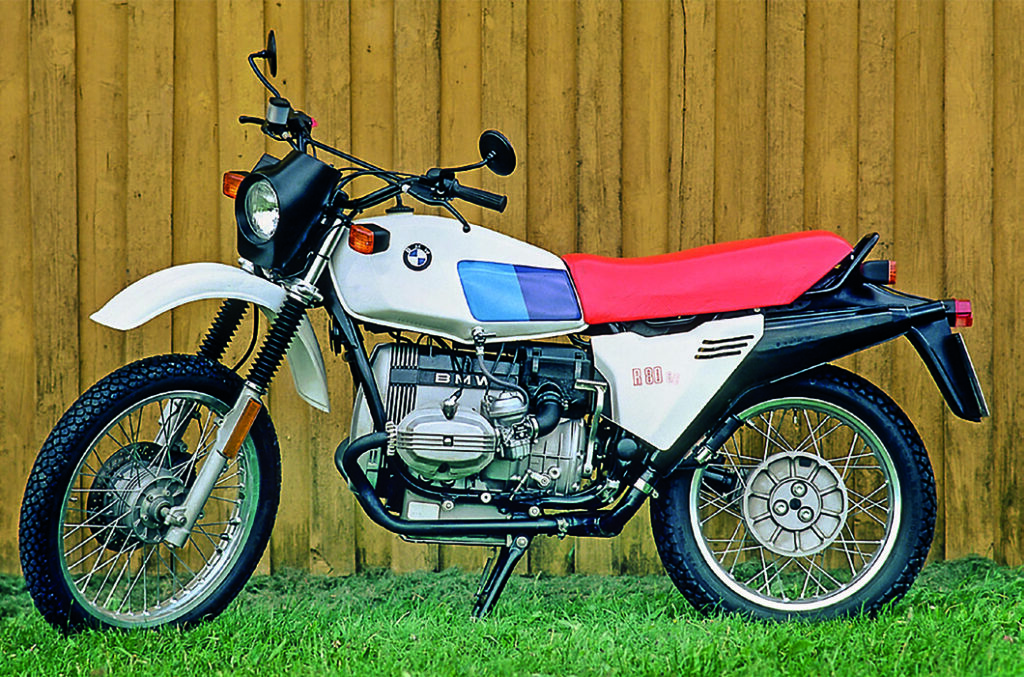
1980 BMW R80G/S
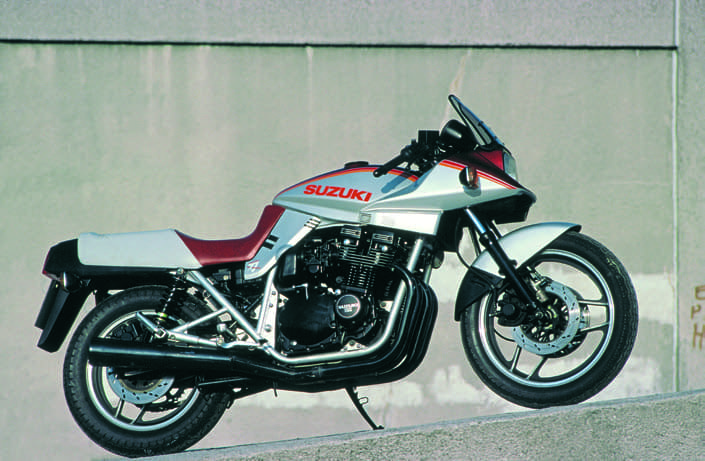
In 1980, Muth founded his own design agency and immersed himself in Japanese culture. A magazine feature led him to style the Suzuki Katana around his personal MV 750S. Presented to Suzuki — a company then struggling for design identity — the Katana became the fastest production motorcycle of its time. Muth famously warned Suzuki boss Osamu Suzuki that, like its namesake sword, the bike’s sharpness demanded respect.
Beyond motorcycles, Muth has designed cars, cameras, luggage and even firearms, and he continues to work today. With landmark machines such as the R90S, R100RS, R80 G/S and Katana to his name, his impact on motorcycle design from the 1970s onwards is impossible to overstate.
As Muth himself put it: “You can sit in a car. But a motorcycle — you are part of it. It is physical.”
The original article appeared in Classic Bike Guide. To subscribe please visit https://www.classicmagazines.co.uk/classic-bike-guide