Anka-Eve Goldmann
At the words ‘Girl on a Motorcycle’, many of you will think of the iconic image of Marianne Faithful in the movie of that name. But who was the unwitting inspiration for that look? John Milton finds out.
Back in the middle of the 20th century when a female riding a racing motorcycle was still considered relatively unseemly, one woman changed perceptions and gave us the endearing and iconic image of a girl in black motorcycle leather.
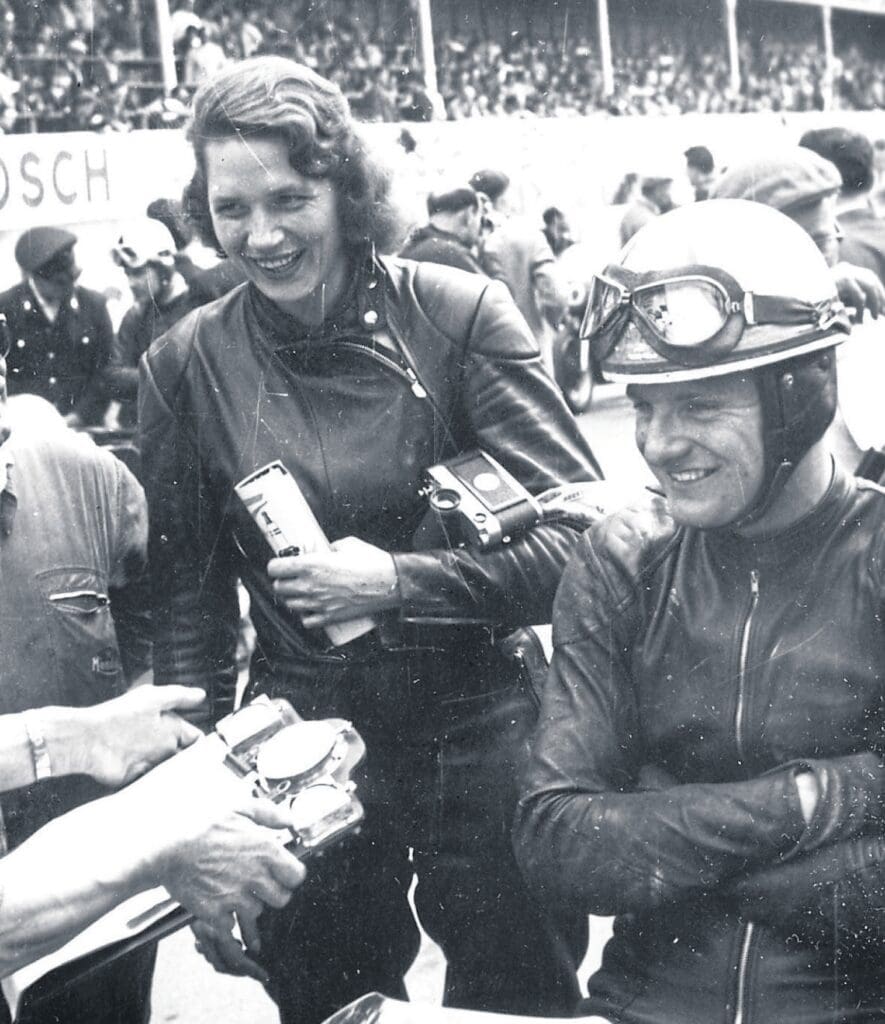
Anke-Eve Goldmann was born in 1930 in Germany and grew into a striking woman who stood over six feet tall. She spoke several languages and taught German to the children of soldiers stationed on a US Air Force base. As early as 1954, when she was just 24 years old, Fräulein Goldmann owned a BMW R67/3 with plunger rear suspension and fishtail exhausts, and she continued her love affair with the Bavarian Motor Works for many years. OBM030_Feb26
Enjoy more classic motorcycle reading, Click here to subscribe to one of our leading magazines.
Living not far from the famous race tracks of Hockenheim and the Nürburgring, she frequently mixed with racers. Anka-Eve competed in endurance and speed competitions, but, as a woman, she was banned from competing in Club or GP racing.
However, she became accepted in a man’s world for her ability to ride and her talent for words. Motorcycling journalism was, in the 1950s and ’60s, an exclusively male club, but that didn’t deter Anka-Eve. Helped by her language skills, she submitted articles to magazines in several countries, including Cycle World in the USA, and became a regular contributor to Das Motorrad in Germany and Moto Revue in France.
She quickly became a well-known figure on the racing scene; her statuesque build made her hard to miss, clad, as she invariably was in top-to-toe black leather.
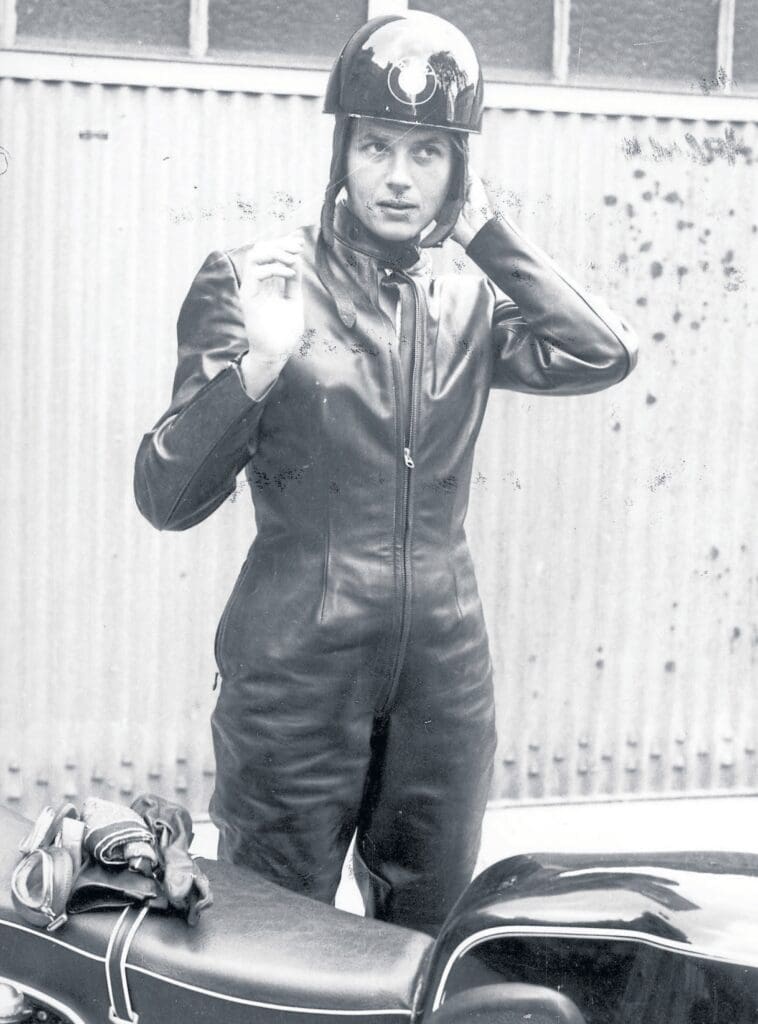
At that point in time, the idea of a major manufacturer endorsing a woman would have been ludicrous and while BMW never sponsored Anke-Eve, it appears that she enjoyed a special relationship with the Munich factory. In 1956, photos show her on a new BMW R69, the company’s fastest flat-twin which was capable of over 100mph and, in 1960, she’s pictured on her new BMW R69S, one of the first half-dozen to be built by the Motor Works.
To be given such priority, someone in Munich clearly liked her, or, at least, appreciated her ringing endorsement of the marque, demonstrated by the large BMW logo she wore on the front of her helmet. OBM030_Feb26
But there is something for which both male and female riders should be grateful (perhaps for different reasons) to Anka-Eve: all-in-one leathers.
Because, in the 1950s, women riders were so uncommon, protective female bike gear basically didn’t exist. If a girl wanted to ride, then about the best she could hope for was to borrow her boyfriend’s leather jacket, which would usually be too big and not tailored to the female shape.
It may have been because she was female, or because of her height – or a combination of both – but Anke-Eve designed her own riding gear and then worked with German manufacturer Harro to produce it.
For summer, she had a one piece zipped leather suit which must have elicited a ‘Phwooah’ (or the German equivalent) from almost every man she met.
But Anke-Eve didn’t care just about looks – the winter version of her suit was far larger and bulkier and not at all flattering, particularly when worn with several jumpers underneath.
And she needed that winter riding gear because she rode all year around, regardless of ice, snow or dangerous roads.
She attended the Elefantreffen (widely regarded as more endurance test than rally) on her BMW for many years and while dozens of photographs survive of Anka-Eve and her motorcycles, in not one is she posing with or in a car. OBM032_Feb26
In 1958, she was one of ten women to bring the Women’s International Motorcycling Association (WIMA) to Europe after it was formed in the USA in 1950.
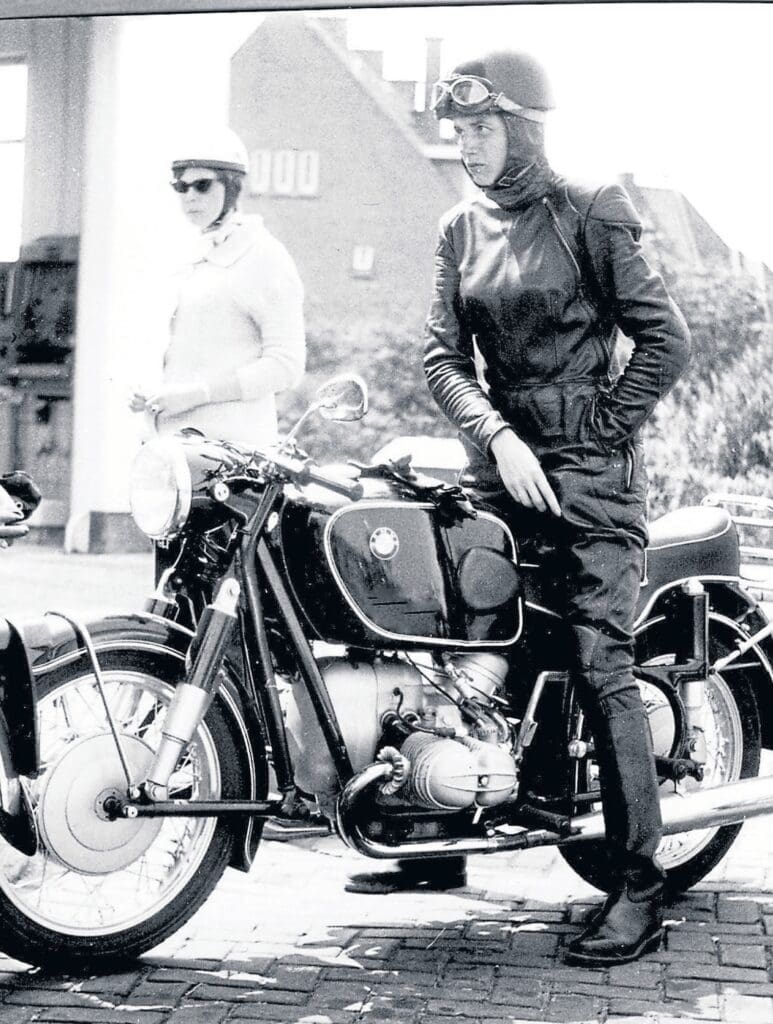
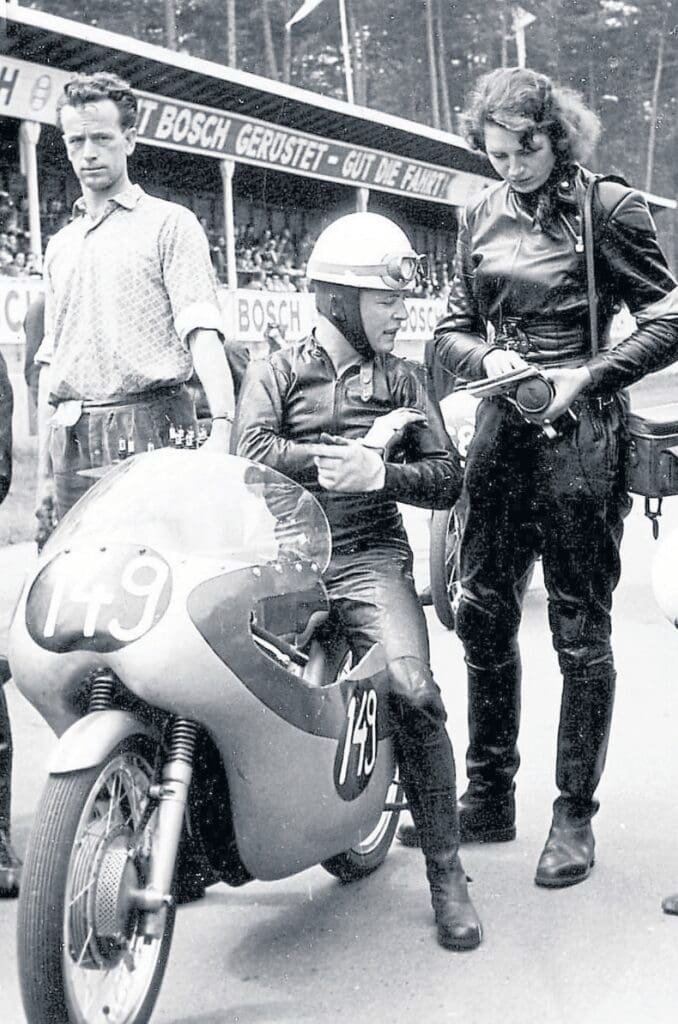
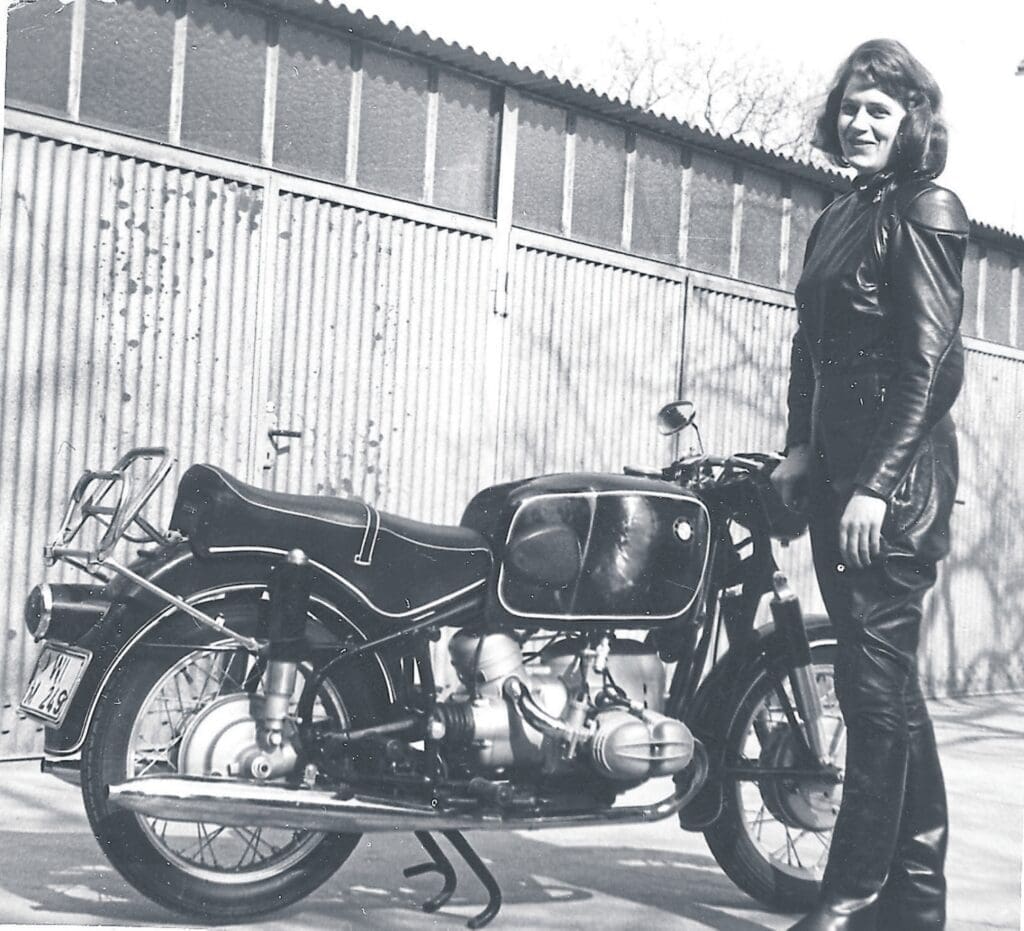
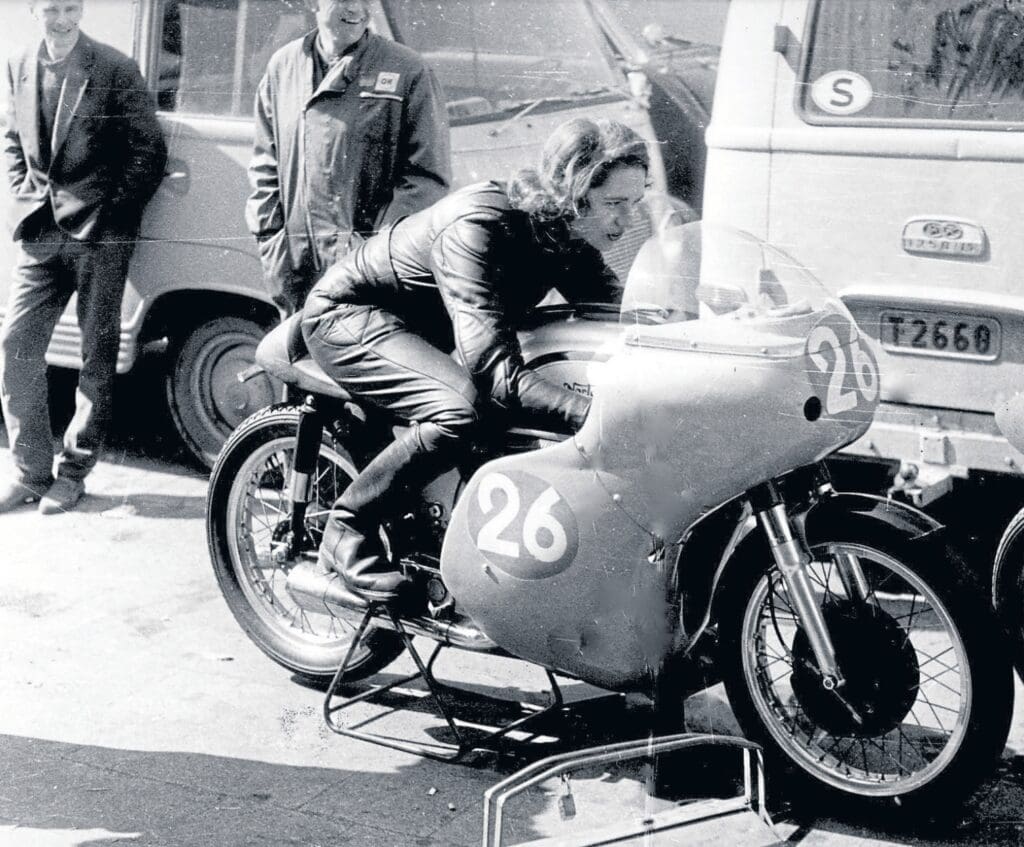
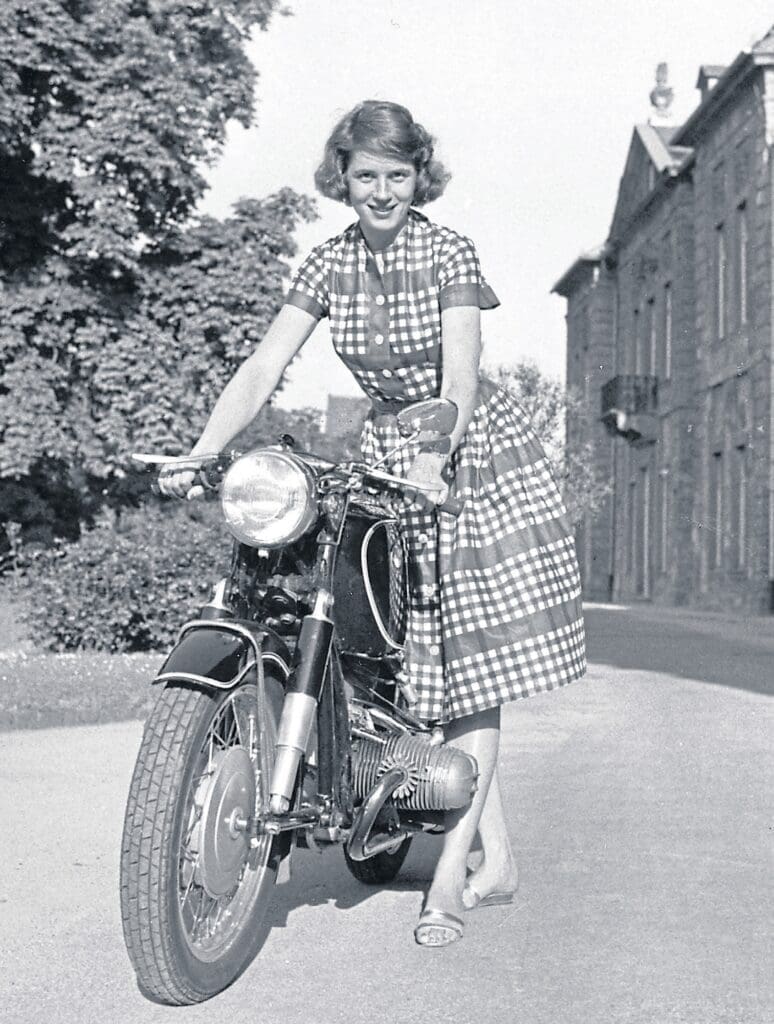
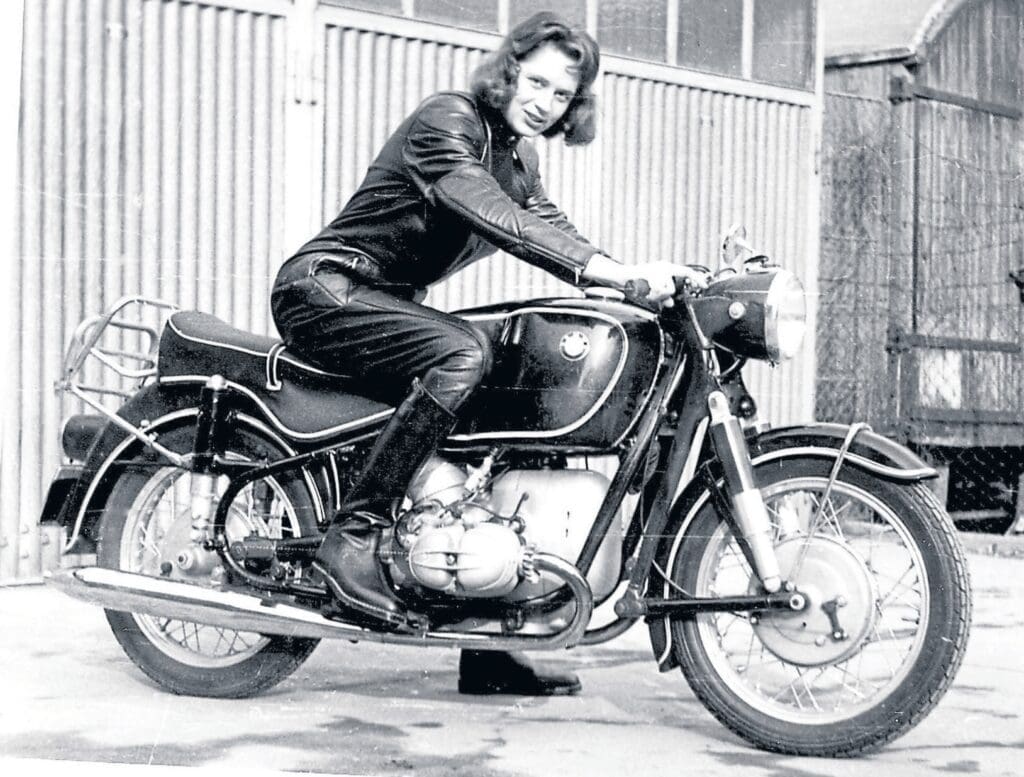
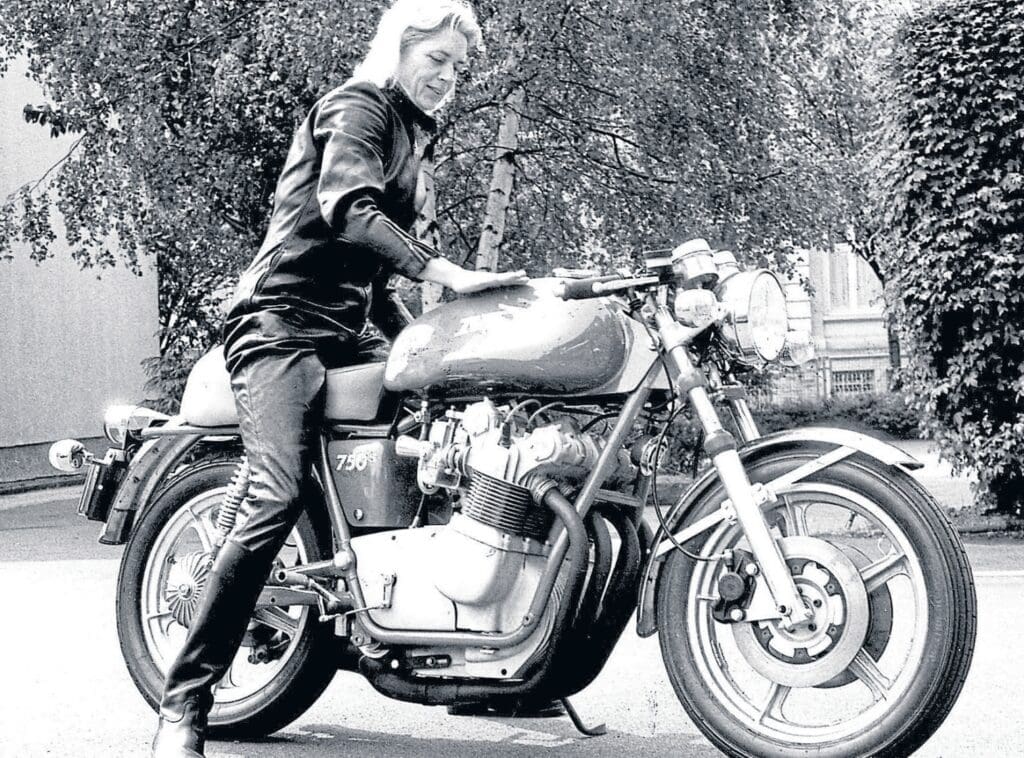
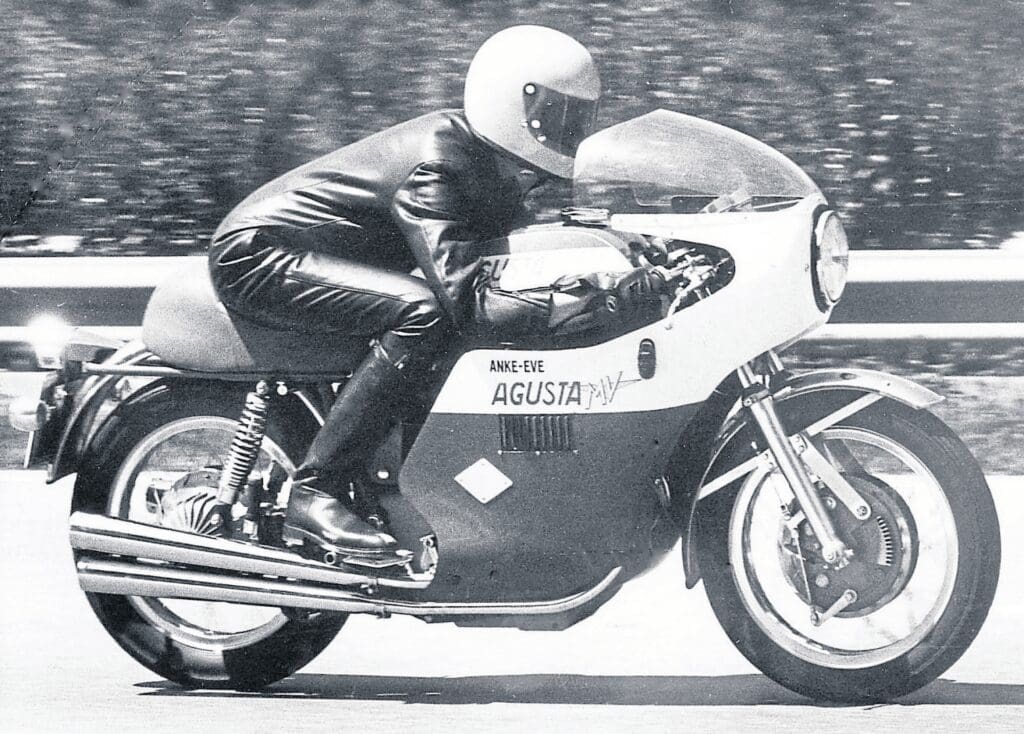
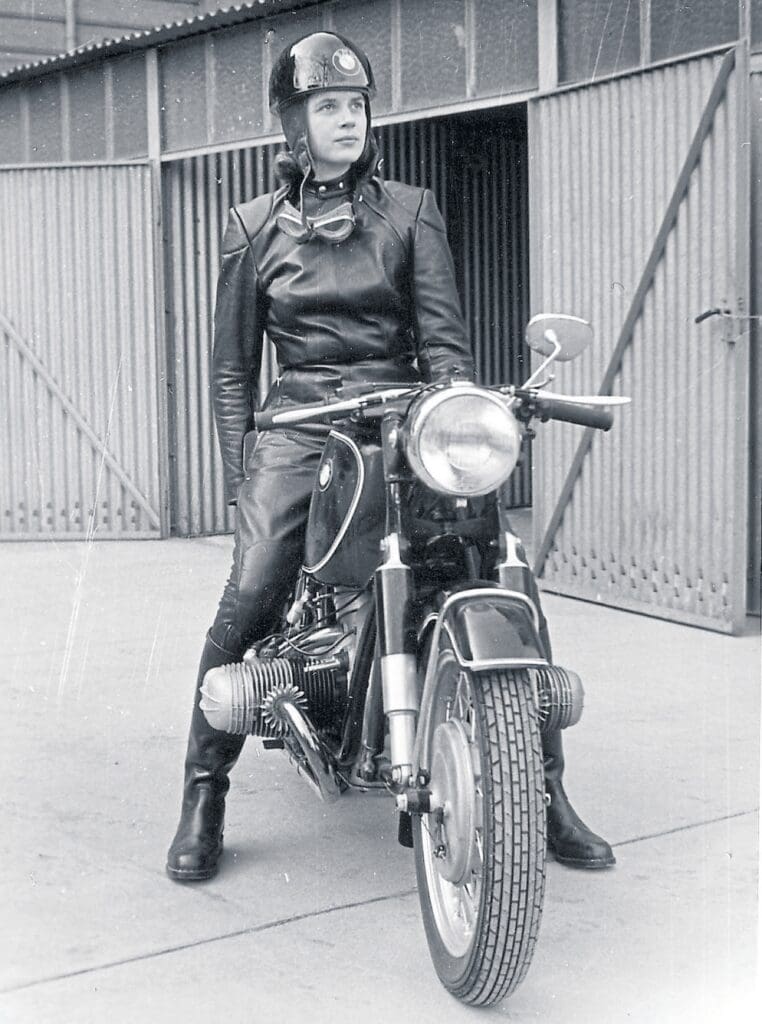
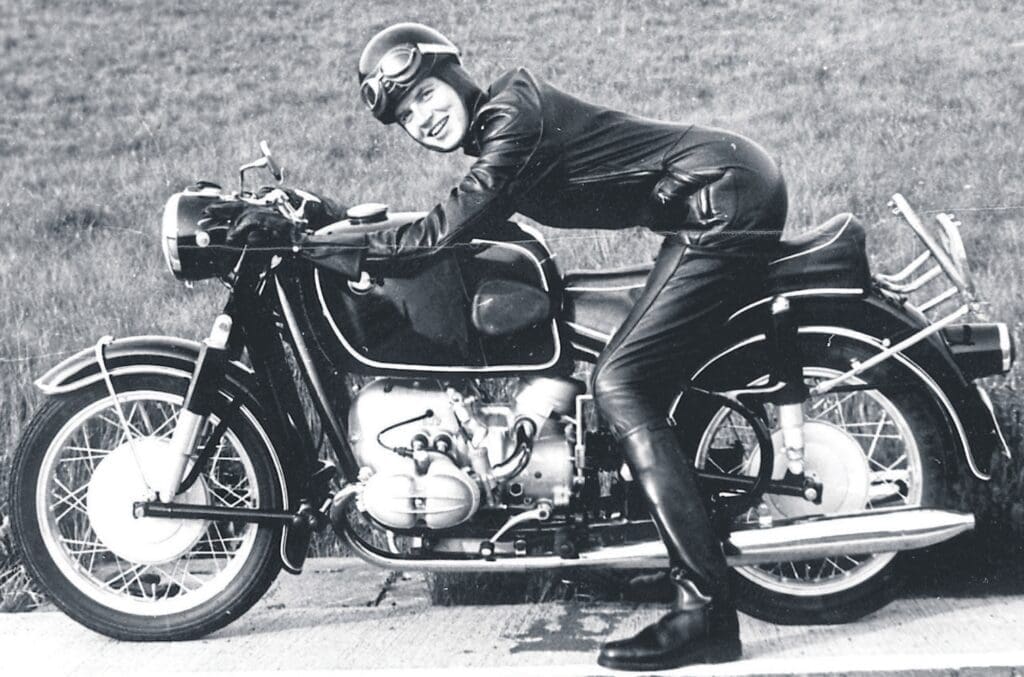
As photos show, she continued to put in track time at Nurburgring, frequently riding on her own as she couldn’t race officially.
In 1962, she wrote an article for Cycle World about women racers in the Soviet Union. This was during the Cold War while the Berlin Wall was being constructed, and for a West German female journalist to go to the Soviet Union was a risky and unusual – in fact, probably unique – endeavour.
There Anka-Eve discovered that women racers were allowed to compete at the highest level, unlike a girl living in the so-called ‘free world’.
In that article she wrote:
“While England is already exceptional in dauntless girls on short circuits, there are hundreds of female road racers competing regularly in Soviet Russia. And the most enviable thing is that they have their own championship races.”
Among Anka-Eve’s many achievements – teacher, racer, designer, journalist – is one that she might not have expected.
She was friends with author André Pieyre de Mandiargues who, in 1963, wrote a novella called The Motorcycle in which the main character, Rebecca, was based upon Anka-Eve.
The book became the 1968 film The Girl on the Motorcycle with Marianne Faithfull as Rebecca, creating thousands of fantasies and a lasting iconic image of a woman in an all-in-one leather motorcycle suit.
It was an image that Anka-Eve hated and of which she wanted no part.
Anka-Eve remained true to her beloved BMWs until 1969 when she bought a four-cylinder MV Agusta that she rode for several years.
However, after her closest friend was killed in a bike accident, Anka-Eve gave up motorcycling and spent time backpacking in the Far East.
Today, aged 95, she lives quietly in Germany, refusing all requests to write her story or to even elaborate to others on a remarkable life.
Original article appeared in Old Bike Mart. To subscribe, click here: https://www.classicmagazines.co.uk/old-bike-mart